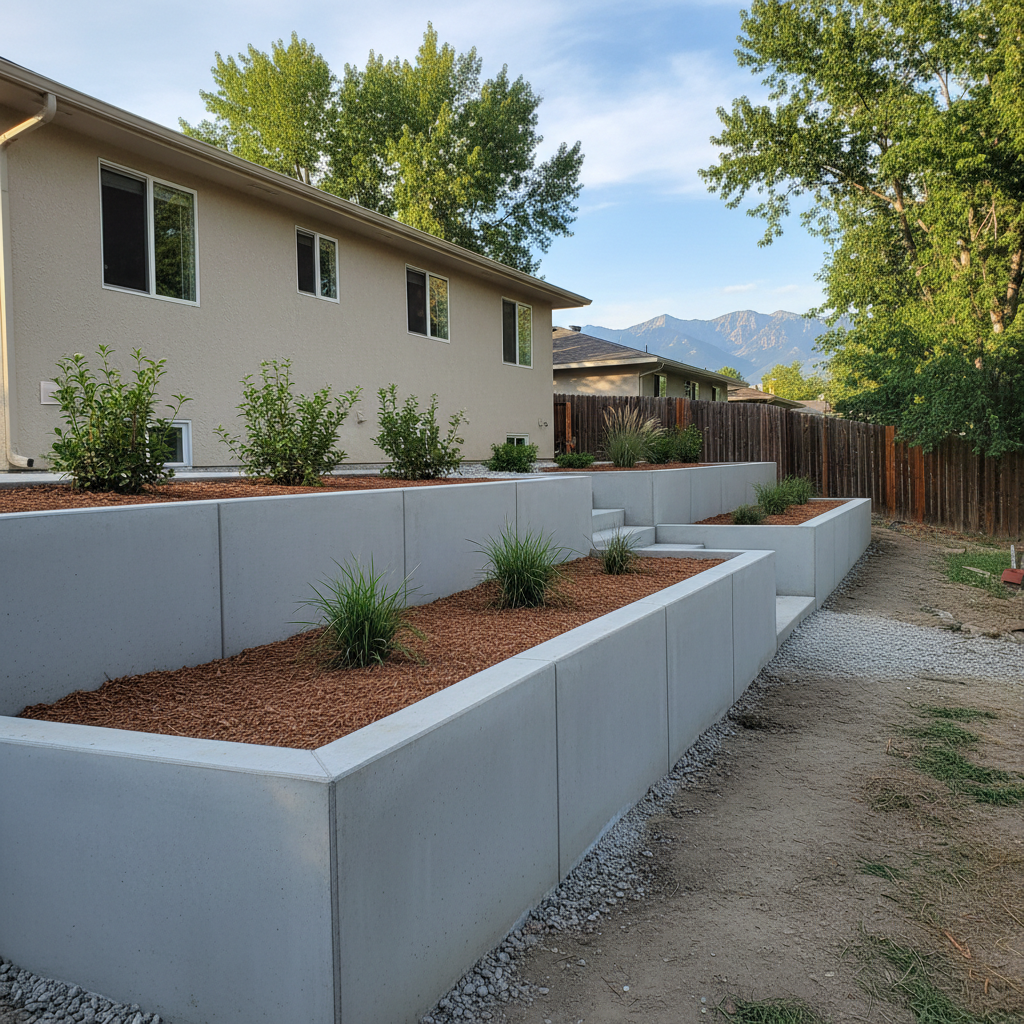
So, you need a retaining wall. Maybe your backyard's got a slope that washes away every spring, or you're just looking to create some flat, usable space. Whatever your reason, if you're thinking about concrete, you're making a smart choice. It's tough, looks good, and honestly, it'll last longer than pretty much anything else you could put in the ground here in Millcreek. But let's be real, the first thing everyone wonders is, "How much is this actually going to cost?"
What Makes Retaining Wall Costs Go Up or Down?
It's not as simple as a flat rate per foot, and anyone who tells you that probably isn't giving you the whole story. A lot of things factor into the final price tag. Here's what I look at when I'm putting together a quote:
- Height and Length: This one's pretty obvious, isn't it? A taller, longer wall means more material and more work. A 3-foot wall is a world away from a 6-foot wall, not just in materials but in the engineering it needs and how much digging we have to do.
- Wall Thickness: Most retaining walls for homes are between 6 and 8 inches thick. If you need something stronger for a heavy load or a really tall wall, that'll definitely add to the cost.
- Reinforcement: Concrete walls absolutely need rebar, no question about it. The amount and type of rebar depend on how big the wall is and what kind of load it's holding. More rebar means more material and more time spent tying it all together.
- Footing Requirements: Think of the footing as your retaining wall's foundation. It has to be wide and deep enough to support the wall, keeping it from settling or tipping over. Here in Millcreek, with our varied soil conditions — especially closer to the mountains where we hit more clay and rock — footings sometimes need a lot more digging and concrete. A deeper, wider footing means exactly what you'd expect: more concrete and more digging.
- Drainage: This is super important for a retaining wall. Water pressure behind a wall is its worst enemy. You'll need a good drainage system – usually a perforated pipe (a French drain, we call it) and gravel backfill – to take that pressure off. Seriously, don't skimp on this; it's what keeps your wall from failing.
- Access to the Site: Can we easily get our equipment in there? If we have to dig everything by hand or use smaller, more expensive machines because access is tight, that's going to push up labor costs.
- Excavation and Backfill: Digging the trench for the footing and the space behind the wall, then filling it back up correctly with good drainage material, takes time and equipment. If we hit a lot of rock, well, that's extra work.
- Finishing: Are you okay with a standard broom finish, or do you want something fancy like stamped concrete or a textured look? Decorative finishes add to both the labor and material costs.
- Permits and Engineering: For walls over a certain height (usually 4 feet in Salt Lake County), you'll need engineering drawings and permits from the city. I don't quote these directly, but it's a cost you'll definitely need to budget for.
Typical Cost Ranges for Concrete Retaining Walls in Millcreek
Alright, let's talk numbers. Based on what I've seen around Millcreek over the years, you're generally looking at somewhere between $50 to $120 per linear foot for a standard, functional concrete retaining wall. This covers walls roughly 3 to 6 feet tall, including the digging, rebar, concrete, and a basic drainage system.
- Shorter Walls (3-4 feet high): Expect to be on the lower end, maybe $50-$75 per linear foot. These are often simpler, need less rebar, and sometimes don't require extensive engineering.
- Mid-Height Walls (4-6 feet high): This is where most residential walls land. You're probably looking at $75-$100 per linear foot. These walls absolutely need proper engineering and sturdy footings.
- Taller Walls (6-8+ feet high): For walls over 6 feet, the complexity and material needs really jump. You're easily in the $100-$120+ per linear foot range, and sometimes even higher depending on specific site challenges and engineering. These projects almost always require professional engineering and city permits, by the way.
Remember, these are just rough estimates. A small, simple 20-foot wall might end up on the higher side of the per-foot cost because there are fixed costs involved just in getting a crew and equipment to a job site. A 100-foot wall, on the other hand, might bring that per-foot cost down a bit.
What Should Your Quote Include?
When you get a quote from Kingdom Concrete Millcreek, or any other good contractor, make sure it's detailed. It should clearly spell out:
- The wall's linear footage and height.
- Excavation: What's covered (like removing dirt, or any clauses about hitting rock).
- Footing details: Dimensions, concrete strength.
- Rebar schedule: The size and spacing of the steel reinforcement.
- Concrete: Cubic yards, PSI strength.
- Drainage system: What kind of pipe, how much gravel backfill.
- Formwork and pouring.
- Finishing: What type of finish is included (like a broom finish).
- Cleanup and getting the site back in order.
- Warranty information.
What's usually NOT included are things like permits, engineering fees, or any landscaping work after the wall is built. Make sure you understand these exclusions right from the start.
How to Avoid Paying Too Much
Nobody wants to get ripped off, right? Here's how to protect your wallet:
- Get Multiple Bids: This is standard practice for a reason. Get at least three detailed quotes. Don't just pick the cheapest; compare what each bid actually includes. A super low bid often means they're cutting corners somewhere, and that'll just cost you more down the road.
- Check References and Reviews: See what other Millcreek homeowners have to say about the contractor. A good reputation is earned, after all.
- Ask About Experience: Has the contractor built walls like yours before? Do they really understand our local soil conditions and building codes?
- Understand the Drainage Plan: This is absolutely critical. A wall without proper drainage is just a ticking time bomb. Make sure the contractor has a solid plan for managing water behind the wall.
- Don't Rush: Take your time to go over quotes and ask questions. A good contractor will be happy to explain everything to you.
- Get Everything in Writing: Every detail, every cost, every agreement. No handshake deals for big projects like this.
Building a concrete retaining wall is a big investment, but it's one that really adds value and stability to your property. Do your homework, ask the right questions, and you'll end up with a wall that lasts for decades. If you're in Millcreek and need a hand, you know who to call.